Why a Video Platform Should Not Be a Closed Product by:
Chief Operating Officer (COO), Flumotion
When a company looks for a video platform, it usually starts with a specific need:
to stream live content, manage an on-demand library, create an OTT channel, or improve its audiovisual distribution infrastructure.
At that point, many organizations begin by looking for a solution that simply covers that initial need. And that makes sense.
However, there is something experience shows again and again:
very few video projects remain the same over time. What begins as a specific need usually evolves quickly into something more complex, with new technical, operational, and business requirements.
And this is where one of the biggest challenges in these types of projects appears:
discovering that the chosen platform cannot adapt at the pace the project evolves.
This need for flexibility is not accidental.
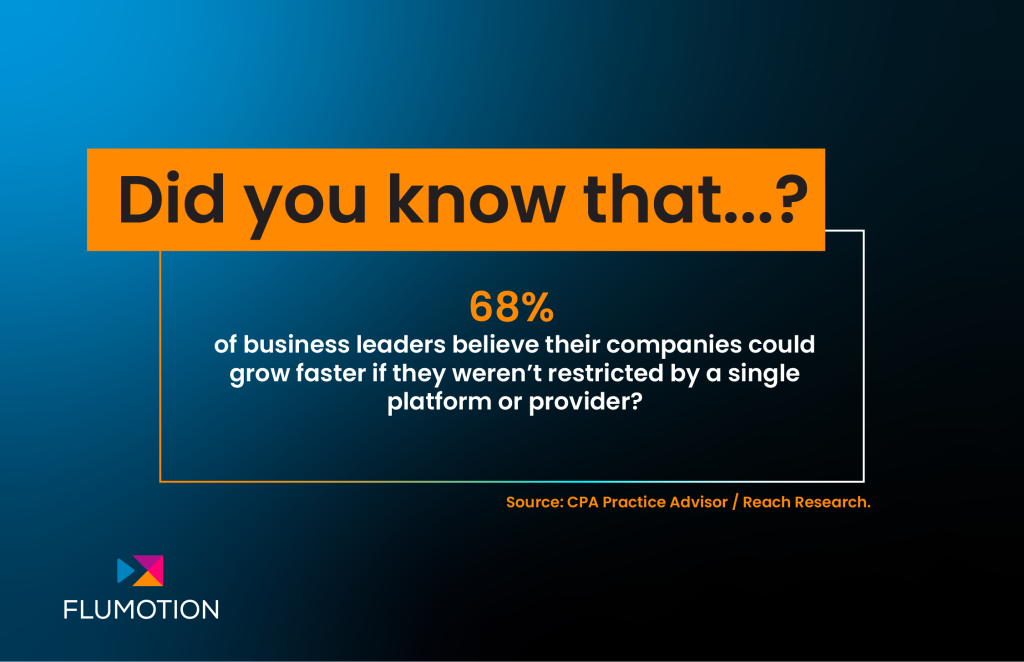
According to a recent study, 68% of business leaders believe their company would grow faster if it were not limited by a single platform or provider. Source: CPA
A clear sign that as projects evolve, technological adaptability becomes a strategic factor.
No Two Video Projects Are Exactly the Same
Although many projects may appear similar from the outside, the reality is that each organization works with different needs, workflows, and objectives.
A platform is not the same for:
- A media company with continuous broadcasting.
- A university delivering online education.
- A sports organization with unpredictable audience spikes.
- A company that needs to integrate video into its internal processes.
Each case involves:
- Different technical requirements.
- Different levels of scalability.
- Specific integration needs.
- Completely different ways of operating.
For this reason, assuming that a single standard solution can address all scenarios in the same way is often an oversimplification.
The Problem with Overly Rigid Platforms
Many video platforms are designed as closed products.
In other words, solutions built to respond well to a specific scenario, with a predefined structure and limited capacity for adaptation.
This approach can work when needs are simple or highly standardized.
But when the project begins to grow or requires something more specific, limitations start to appear, such as:
- Difficulties adapting workflows.
- Integration issues with other tools.
- Dependence on additional manual processes.
- Restrictions when incorporating new functionalities.
At that point, technology stops being a support and starts becoming an operational barrier.
A Professional Platform Should Adapt to the Project, Not the Other Way Around
In professional environments, a video platform should not force the client to modify their operations to fit within its limitations.
Technology should adapt to the reality of the project.
This means working with solutions capable of:
- Adapting to specific needs.
- Integrating into existing technology ecosystems.
- Evolving with new requirements.
- Supporting structural changes without redesigning the project from scratch.
Because when technology adapts correctly from the beginning, future growth becomes much more sustainable.
Each project requires a different combination of capabilities, integrations, and workflows.
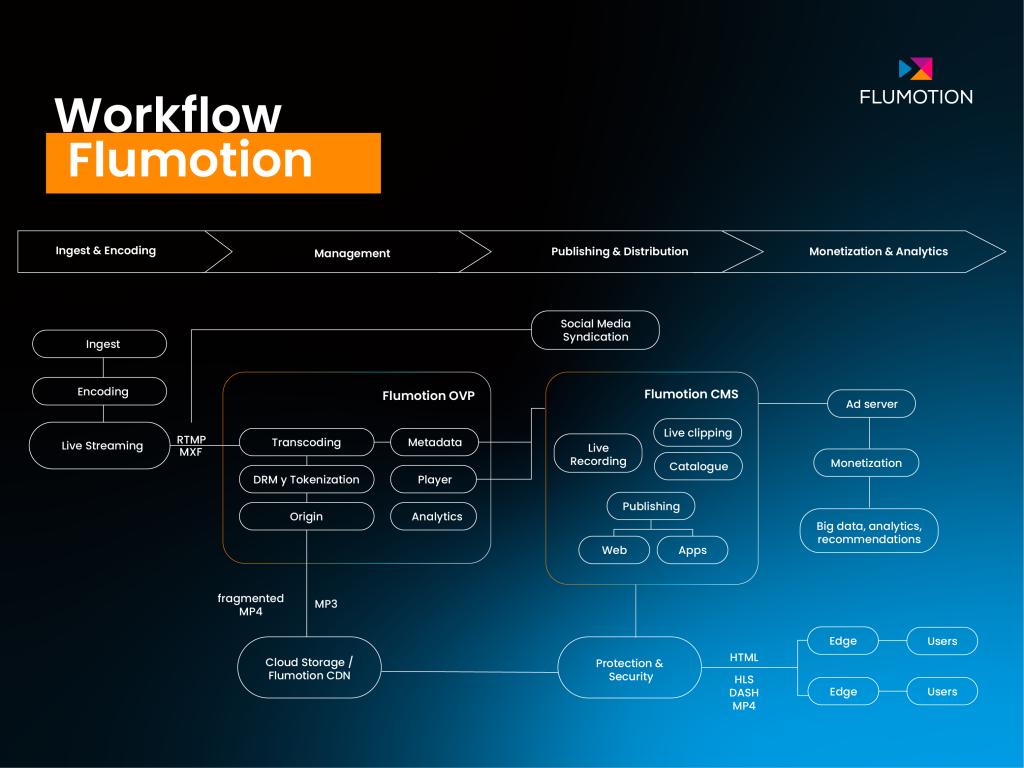
For this reason, in many cases, the key is not using a closed solution, but building a modular architecture capable of adapting to each specific need.
Beyond Technology: The Value of Consulting
In many cases, the challenge of a video project is not only choosing the right technology.
It is understanding what the project actually needs.
And for that, technology alone is not enough.
What’s required is:
- Initial analysis
- Operational understanding
- Architecture design
- A consultative approach that makes it possible to build the right solution for each scenario
That’s why, in complex projects, working with a flexible platform is important.
But working with a partner capable of advising and designing the right solution is just as important.
Conclusion
Choosing a video platform should not be just about reviewing features.
It should involve asking:
- Will this solution truly be able to adapt to what we need today… and what we will need tomorrow?
Because in video, the challenge is usually not just getting started—it’s building something that can evolve over time.
And for that, more than a closed tool, many organizations need a flexible, customized solution designed around their operational reality.
Chief Operating Officer (COO), Flumotion
Let's design your streaming architecture
We analyze your situation and determine the optimal combination of products based on your technical and business needs.